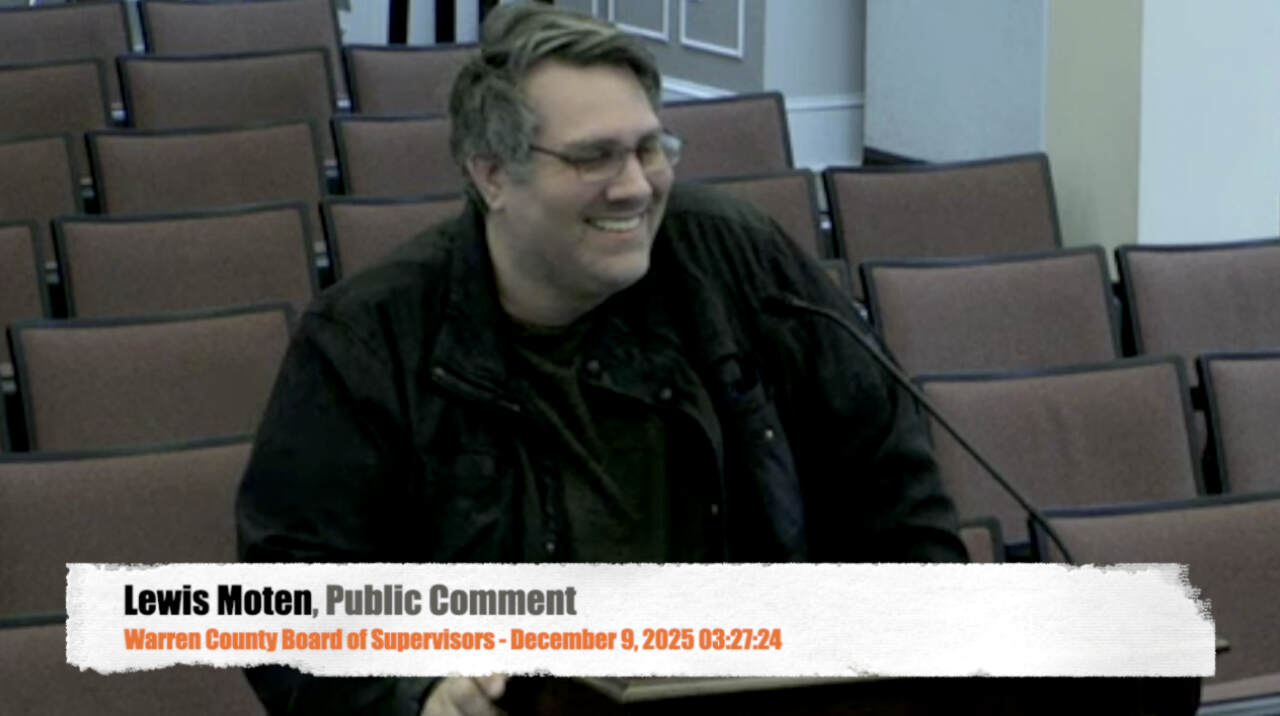
Today marks one year since I started speaking to the Board of Supervisors during public comment and public hearings as a private citizen — all because of a leaked email in which a supervisor described the entire library board and me as “as dumb as a bag of rocks.”
I’ll be honest: that hit harder than most might expect. Growing up with learning disabilities, spending most of my school years in special education, and taking the long road to eventually earn my associate degree — I’ve always had to work twice as hard to keep up. So when I read that email, it struck a nerve. But instead of stepping back, I stepped forward.
I wasn’t comfortable with public speaking at first (few people are), but over the last year, I’ve grown into it. I’ve attended committee meetings, dug deep into agenda packets, and learned how county government actually functions. This came at the expense of time I normally dedicate to organizations where I volunteer and serve in multiple roles, and, in some cases, as an officer. However, the long-term impact was worth the sacrifice.
My background in programming is heavily research-oriented and analytical. I’ve worked for companies such as Analysis Research Planning Corp. and Computer Sciences Corporation. Where some people find prospectuses, ordinances, court filings, or fiscal analyses tedious, I find them oddly comforting — like puzzles waiting to be solved. That skill set has helped me navigate the “firehose” of information produced by local government.
Anyone who knows me knows I’m also the guy who will spend an evening watching long-winded court cases online for fun. Civil asset forfeiture hearings, zoning disputes, copyright battles, tree law (yes, that’s a real thing) — if a lawyer is breaking it down with commentary, I’m probably watching it. Most people relax with sports or sitcoms; I unwind by learning how obscure regulations work in the real world and how some governments tend to misuse them to put their thumb on the scale. It’s just how my mind is wired, and it’s why local government documents (even the dense ones) don’t scare me off.
Over the years, I’ve also discovered something about myself: I tend to be the unexpected gem in everyone’s back pocket. Most people don’t initially suspect the depth of my skills because of my humble appearance, speech, or demeanor — but they’re often surprised when I show up with detailed research, creative solutions, or insight that goes deeper than knee-jerk reactions. I ask simple questions — often questions I already know the answer to — because they’re the ones no one else wants to ask, or they open the door to deeper questions that reveal what really matters. It’s just how my mind works: quietly, curiously, analytically.
Another thing I’ve learned is how important it is to have a variety of people speaking. When I show up regularly, the supervisors get familiar with me — my style, my priorities, and the themes I care about. I try to rotate topics, whether it’s broadband, finance, short-term rentals, or transparency, but I’m still just one person with a recognizable voice. When the same individuals appear meeting after meeting, officials can grow comfortable — even predictable — in how they respond. But when different citizens speak up — new faces, new backgrounds, new concerns — it keeps elected officials alert, engaged, and listening. I can only be myself, and I cannot represent every viewpoint in the county. That’s why the community needs everyone’s voice. The more people who step forward, even once in a while, the stronger and more diverse the message becomes. (Fun fact: Children can speak as well.)
Something else most people don’t realize is how public speaking works in government meetings. In the regular public comment period, you only get one chance — no rebuttals, no clarifications. But public hearings allow you to speak again each time the hearing reopens. That means you can respond to new information, address misunderstandings, or reinforce a point that wasn’t discussed earlier. It feels confusing at first, which is why people sometimes try to argue from the audience. But once you understand how the structure works, you realize it gives citizens more power than they realize—the power to spark public dialogue rather than one-and-done comments.
Over the past year, I’ve also taken on some unexpected roles — including completing probation in a clown club and earning the honorary name Dr. Leo, which pairs nicely with my honorary PhD in Comedic Science from Abide University. So yes, I am officially Dr. Lewis Moten, PhD — and the joke is half the point.
To mark this year, I assembled a collection of video clips: instances when I spoke, instances when supervisors responded, and segments where I added context to the documents under discussion. If you’re curious about what civic involvement looks like from the inside, here’s a small window into that world.
I’m grateful for everyone who has spoken up on behalf of the community, and I encourage more people to do the same. The more voices we have, the clearer the direction becomes. The supervisors don’t just need opinions — they need a chorus of perspectives from the people they serve.
You don’t have to start strong. You have to start. And together, the community will be heard.
— Dr. Lewis Moten, PhD (Comedic Science) / Dr. Leo, The Bard of Bizarre