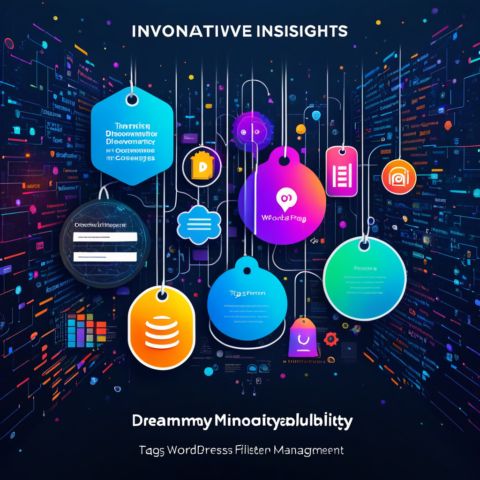
Monica Podcast (as tested January 18, 2026 while plans were in beta testing) https://monica.im/ai-podcast
What follows isn’t a review of output quality alone, but an examination of how pricing, policy, and interface design shape consent.
Now this was interesting.
I started evaluating podcast-generation services by using AI to analyze AI. Many popular podcasts rely on two people in conversation—less like a lecture, more like something you’re quietly part of. That dynamic was what initially drew me in.
The first service I tried was Monica Podcast. It requires an existing URL, though it also supports PDFs and video uploads. I hesitated when, after pasting a link, it immediately prompted me to create an account instead of continuing the task. Sign-up via Google was quick, but the experience raised an eyebrow.
Using the Service
Once submitted, the Dreamy Tags blog post was processed faster than the advertised 10 minutes. While it worked, I could see things happening in real time: a cover image was generated, a short summary appeared, and then a full conversational script took shape. The end result was a five-minute podcast episode complete with named segments and timestamps (Figure 1).


Enhancing Content Discovery: Lewis Moten and the Dreamy Tags Plugin
🕓 05:03 | 2026/01/18
In this episode, we explore the innovative insights of Lewis Moten, who shares his diverse expertise in creativity and technology. Discover how his WordPress plugin, Dreamy Tags, revolutionizes content discoverability by filtering tags effectively. Learn about its open-source advantages, the potential for future enhancements, and how it can transform the way website owners manage their content.
Highlights
- 00:06 Unlocking the Mysteries of Dreamy Tags
- 01:04 Cleaning Up the Tag Jungle
- 02:11 The Power of Nostalgia
- 03:13 Creativity Unleashed
- 04:16 The Future is Bright
View Podcast Script
👩🏻 Emily
Hey there, everyone! Welcome to today’s episode! We’re diving into a topic that’s as intriguing as it is essential for anyone involved in content creation or running a website. We’re talking about a little gem called ‘Dreamy Tags.’ Now, imagine your podcast, blog, or a whole bunch of creative projects scattered across the internet like marbles on a floor. How can you bring some order to that chaos?
👨🏼🦲 Michael
Yes! So, umm, what exactly is Dreamy Tags? Is it like creating a, um, magical tag cloud or something?
👩🏻 Emily
Haha, kind of! Think of Dreamy Tags as your trusty sidekick in the world of tag clouds. You know those big old clouds of tags on websites? They can get pretty messy, right?
👨🏼🦲 Michael
Oh totally! I’ve seen websites where the tag cloud looks like a game of jumble, like a word salad or something. So, umm, how does Dreamy Tags actually fix that?
👩🏻 Emily
Great question! Dreamy Tags filters out the noise—the tags that don’t really pertain to the content—and highlights the recurring themes. It’s like having a janitor for your online space, cleaning up the clutter so you can see the important stuff!
👨🏼🦲 Michael
Wait, a janitor? So, in a way, it’s like it’s tidying up your ideas? Umm, that sounds pretty cool! Do you have an example of how this would work in the real world?
👩🏻 Emily
Absolutely! Let’s say you’re running multiple podcasts—one about gaming, another about cooking, and perhaps even a third mixing the two. Without Dreamy Tags, anyone trying to find your gaming episodes could wade through all the cooking stuff and vice versa. But with this plugin, you create focused tag clouds. If someone searches for your gaming content, they can see tags related to that, like ‘strategy’ or ‘game mechanics,’ without having to sift through recipes!
👨🏼🦲 Michael
Wow! So, it’s like separating your gaming snack ideas from your, umm, actual game reviews? That makes so much sense!
👩🏻 Emily
Exactly! It makes your content accessible and engaging, which is crucial when your audience is already inundated with information. And here’s a little nugget—a lot of people get lost in their own archives. They forget about what they’ve created! Dreamy Tags allows people to relive the themes they really care about, creating a sort of nostalgia.
👨🏼🦲 Michael
Ooo, nostalgia! That’s a strong vibe! But, umm, if this is open source, does that mean it’s customizable? Like, could my cousin, who’s a coding whiz, change it up?
👩🏻 Emily
Oh totally! That’s one of the best parts! You can modify it under the ISC License, allowing flexibility for those who need custom solutions. So, if your cousin wants to ‘pimp’ it out to better fit his website’s style or needs, he can do that without any issue!
👨🏼🦲 Michael
That’s awesome! It makes me think—like, do you think we’ll see, umm, more creativity in utilizing tag clouds because of this? I mean, could artists, for instance, spin it in their own unique way?
👩🏻 Emily
For sure! Artists can use it to highlight different mediums, styles, or themes in their work. It’s just a matter of creativity. Imagine an artist showing their evolution through different tags—like ‘watercolor’ evolving into ‘mixed media.’ They could manage their entire portfolio in a visually impactful way!
👨🏼🦲 Michael
Whoa, that’s like digital storytelling through organization! So, umm, do you think there are future enhancements planned for Dreamy Tags?
👩🏻 Emily
Oh definitely! There are talks of improved styling controls and upgrading user experience for heavier archives. That’s key! When you’re managing, like, a ton of content—think large podcasts or extensive portfolios—those factors really come into play.
👨🏼🦲 Michael
I’m so into this! Dreamy Tags sounds like a game-changer. I mean, managing content effectively opens up new avenues for how folks engage with their work, right?
👩🏻 Emily
Absolutely! It’s all about fostering better relationships between creators and audiences. When you streamline how people access your content, it’s a win-win for everyone involved!
👨🏼🦲 Michael
I, umm, absolutely love this! Just thinking about how much easier things could be for creators is really exciting! Do you think, over time, plugins like this will change the landscape of content creation?
👩🏻 Emily
Oh, no doubt about it! As creators, we need tools that help us communicate effectively, and Dreamy Tags is one of those tools that can redefine how we interact with our audiences.
👨🏼🦲 Michael
Wow! What an amazing conversation this has been! I can’t wait to see how this evolves!
What stood out is that the system doesn’t treat your content like a script—it treats it like source material. Light background music fades in occasionally, just enough to establish mood without distraction. The script (Figure 2) can also be exported as a PDF, which makes it readable—or even performable—with a second person.


Interpretation vs. Performance
The rough edges are still there. The voices unmistakably sound like AI. Timing is sometimes sluggish, and laughter is firmly robotic. Something essential about human personality is lost when conversation shifts from spontaneous dialogue to scripted or AI-generated delivery. Over time, the service may improve to give the voices a more charismatic feel, but subconsciously, it’s hard to emotionally invest in a host on any level when you know they don’t exist.
Concerns
On smaller screens, a persistent QR code overlaps content and cannot be dismissed, making it quickly annoying. If the audio isn’t playing, clicking a highlight will jump to that position, but will not start the audio. Dates are formatted in an odd way as year/month/day, which seems to be more in line with Japanese dates.
I already have paid access to the latest ChatGPT models, but it seemed I couldn’t use my own service to integrate them and would have to rely on paying for yet another access point to get indirectly into those models. On a free account, I’m restricted to using mini versions of older models.
Still, as an experiment in content transformation, it was surprisingly effective—and revealing. This feels less like podcasting as performance, and more like podcasting as interpretation.
Trust, Consent, and Policy Risk
A 12-hour countdown timer across the top of every page pushed a “limited-time” discount—one of those high-pressure cues of artificial urgency that usually sends me running. If the product were strong on its own, time wouldn’t be a weapon.
Stranger still was the pricing format: “$12.4/mo.” No cents. Not rounded. Just… floating decimals. In a cashless, digital marketplace, it felt oddly unfinished—perhaps a UI compromise rather than a deliberate choice.
Clicking the banner presents only the “Newcomer” discount in a modal dialog, obscuring the existence of other plans unless the dialog is dismissed (Figure 4). Once dismissed, I saw four plans (free, Pro, Max, and Ultra) without Newcomer, and Max was suggested as the over-optimization of choice (Figure 5). Since the Newcomer discount didn’t include the annual price, it takes some quick math to realize $12.40 times twelve months is $148.80 annually. The Newcomer discount is 20¢ less than the annual rate of the discounted Max plan. It’s as if the Newcomer plan had been renamed Max, breaking continuity and making comparisons difficult. It was at this point that I realized the lower-tier “Pro” plan would have cost roughly a third as much as the Newcomer plan. The real surprise comes a year later: a commitment trap in which the original discounted plan doubles to its non-discounted price through an automatic renewal tied to the Max tier.


Plans range from free to ultra, with prices scaling sharply based on features and billing cadence. Many features repeat across tiers, making it harder—not easier—to understand what actually changes between plans or whether higher tiers justify the extra expense (Figure 6). A column for the Max plan is highlighted in various grids. The result isn’t clarity. It’s over-optimization of choice.
Blank Check Transparency in the Fine Print
It doesn’t feel like it’s part of the decision process of choosing plans, but I started reading the frequently asked questions (FAQ) at the bottom of the long list of plan choices (Figure 7). I found that the “Max” plan used to be called “Unlimited”, and that rules and pricing for “Max” and “Ultra” may be adjusted based on both cost and policy (Figure 8). This means what you are buying has been reframed by the FAQ after all of the pricing pressure. They have retreated from a promise, as Unlimited implies a stable entitlement, and Max implies a cap that can move. You are not buying a product – you are buying access governed by future discretion. On top of that, “policy” is a blank check. There is no measurable ceiling, contractual guarantee, or predictable renewal outcome. Policy isn’t a constraint. It is an authority. It allows retroactive changes without renegotiation. This disclosure is late and buried after urgency, plan renaming, obscured comparisons, and encouraged commitment. The service may claim transparency, but in reality, it’s a post-decision disclosure. The company can change terms that require the customer to actively monitor messages on the platform, and inaction defaults to acceptance.

Personal Use Only
Another fine-print restriction in the FAQ states that the service is intended for personal use only to avoid triggering unspecified “risk controls” (Figure 8). That limitation is difficult to reconcile with an Ultra plan priced around $83 per month (Figure 5). At that price point, users reasonably expect a professional-grade service, not additional ambiguity around acceptable use.
The mismatch extends to plan naming. A tier labeled Pro (Figure 5) conventionally signals professional or commercial use, yet the accompanying restrictions suggest otherwise. If “Pro” does not imply professional use, then its meaning becomes unclear.
More concerning is the vagueness of the term “risk controls.” The FAQ offers no definition of what behaviors trigger enforcement, no thresholds or metrics, and little guidance on how limits are applied. The only explicit penalty mentioned is account termination if sharing is suspected.
At the same time, the service actively promotes content transformation, generates distributable audio, and highlights use cases that closely resemble professional workflows. The result is a contradiction: the product is marketed as a tool for serious creators, while the fine print effectively cautions against using it as one.
Broken Trust
In general, these high-stress markers break trust, increase cognitive load, and prevent informed consent. It only works when people are rushed, which ties back to the countdown.
Second Trial
Updated: January 19, 2026
I was curious how Monica Podcast would translate the review I created (this page) into a podcast, and how the system would handle it. On my second attempt to generate a podcast, I was presented with a modal dialog prompting me to install a proprietary browser extension to continue (Figure 9). The dialog was framed in celebratory language, complete with 🤩 star-struck emojis and a prominent 🚀 rocket-powered “Install Now” call to action. Rather than a clear upgrade path, this represents a midstream rule change.

For a service already framed around “risk controls,” the extension introduces another opaque layer of control, blurring the line between capability and gatekeeping. At that point, it becomes unclear whether the limitation is driven by system load or by enforcement and tracking. Browser extensions are commonly used to monitor behavior, enforce quotas, detect patterns, and apply client-side controls. Requiring one only after an initial success suggests that “personal use” is not solely about scale, but about visibility and control.
The framing of excitement minimizes the seriousness of the request. This is not simply an upgrade. It introduces a new dependency and expands the trust surface. Questions that would normally accompany informed consent—what is required, why it is required now, and what changes once installed—are left unanswered. Consent achieved through momentum is not the same as consent achieved through understanding.
Taken together, this reinforces a pattern already observed throughout the service: constraints revealed progressively rather than disclosed upfront.