Podcast: Dreamy Audio
Episode: 64
Title: Damaged Cards
Host: Lewis Moten

Release Date: Circa November 10, 2005 – May 5, 2006
Restored Date: January 18, 2026
Duration: 5:22
Channels: 1 (mono)
Sample Rate: 44.1 kHz
Encoding: MP3, VBR (~130 kbps)
File Size: 1.4 MB
Summary

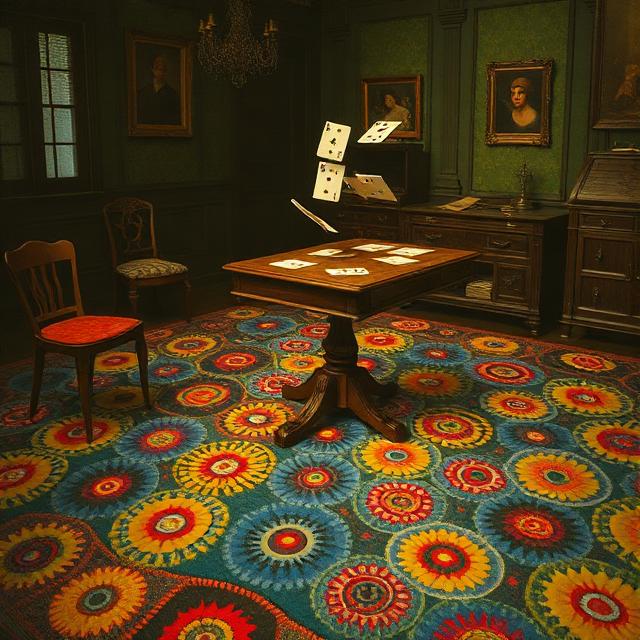
The dream centers on an antique, mechanical card game—part furniture, part gambling device—that physically shuffles and deals cards while deducting real money for mistakes. At first, the narrator struggles to understand its rules and quickly loses credit, realizing the machine demands careful attention and respect. After only a few hands, a strange error appears: two cards fused into one, hinting at a deeper mechanical or symbolic malfunction.
When the machine fails completely, a repairman explains the cards must be carefully separated and laid out on a soft cotton surface, sorted by color. While searching for something suitable, the narrator finds a handmade crochet blanket, cherished by his wife, created by a family member by marriage. Using this intimate, domestic object, he carefully lays out the cards, blending the precision of the game with the warmth of family and care.

Analysis
This dream reflects tension between precision and care. The mechanical game symbolizes systems that punish inattention, while the fused cards suggest blurred boundaries or overlooked details. Repair requires softness and patience, implying that some problems—especially self-inflicted ones—can only be resolved through gentler, more human methods.
Related Dreams
This episode connects with #63, which explores over-engineered systems that demand unnecessary complexity; #57, focused on placing technology in spaces that no longer fit; and #55, where a gatekeeper withholds approval despite earnest effort. All revolve around control, rules, and costly misunderstandings.
Similar Dreams in History
Fyodor Dostoevsky wrote of dreams involving gambling devices that punished moral hesitation. Nikola Tesla described mechanical systems in which minor errors could cause cascading failures. Charles Dickens recorded dreams where domestic objects unexpectedly resolved rigid, institutional problems.
Transcript (auto-generated)
So there was this antique, mechanical, Parker game that our press-up button, it would shuffle some cards and throw a few cards in front of me at first I didn’t understand what I was doing and I would mess up what I was trying to do. The machine actually withdrew credit from my account so I really had to pay attention to what I was doing.
I was mowing money so I had to try and make sure that I could get up on my lock. I only played three hands. This antique machine was like a table, an end table that came up and then there was a hollow box where there were four sides that came up from the top of the table. To the right there was something that you would put the cards in when you were done and it would shuffle them up and then it would come over to the left side and spit out five cards. And you would be able to put some of the cards into a little pile just by touching them and then it would spit out.
I did not get back up on my luck at all. I started putting the cards away and I saw one card. It was the two of the spades and two of the clubs that were thrown together. But I put together somehow so that it looked like one card.
And I just separated them. When I put all the cards into the feeder, the thing bombed and wouldn’t work. So I took it in the back and somebody else who repairs things started to take a look at it. And he said that the cards need to be laid out right away on something soft made of cotton. And I needed to separate all the ones with the red faces from all the ones with the green faces.
And I could either do it there or do it wherever it was that I was at if I needed to use the cards myself. So I left the back of the building and started looking in the front for blankets or something made of cotton. And I found a very long crochet blanket that my mother-in-law made for my wife. This particular item doesn’t exist in real life but that’s the story behind it. And in the dream my wife really liked the blanket. So I took it to the back, made it on the table and started laying out all the cards on the blanket.