Government: County of Warren, Virginia
Body: Board of Supervisors
Date: January 20, 2026, 7:00 PM
Location: Warren County Government Center
Type: Public Comment
Timestamp: 01:26:08
Duration: 02:06
📍 Warren County Government Center
📅 January 20, 2026
📄 Agenda Item E.7 – Z2025-11-01
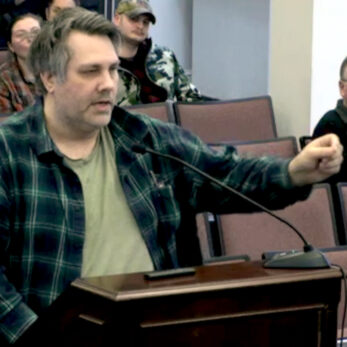
This video contains my public comment during the Warren County Board of Supervisors hearing on proposed zoning text amendments to allow an exception for one rooster in the Residential-One (R-1) zoning district.
The proposed amendment would permit one rooster on R-1 zoned lots (or contiguous lots under the same ownership) totaling at least one acre. The draft ordinance required that the rooster be kept in a coop between 10:00 PM and 7:00 AM and that the coop be insulated for sound.
The Planning Commission previously reviewed the proposal on December 10, 2025, and forwarded it to the Board of Supervisors with a recommendation of denial (4-0, one abstention), citing concerns about enforcement, noise impacts in residential subdivisions, flock growth, lack of measurable sound insulation standards, and consistency with other poultry restrictions.
In my remarks, I acknowledged my prior concerns about allowing roosters — based on direct, lived experience growing up around poultry and later living near a rooster in violation of the ordinance. My focus during this hearing was on clarity and enforceability. Specifically, I raised concerns that the term “soundproofing” lacked measurable standards and suggested a more practical enforcement approach: if a rooster can clearly be heard from the nearest neighboring residence, particularly in response to a complaint, that may indicate noncompliance.
My goal was to support a balanced approach — one that respects property owners who wish to keep a rooster while also protecting neighbors’ reasonable expectation of peace in residential areas.
Thank you for watching and for engaging in local governance.
Prepared Public Comment
Good evening. My name is Lewis Moten, and I live in the North River District.
I want to begin by acknowledging that in the past I raised concerns about allowing roosters in residential areas. Those concerns came from direct experience—not from theory. I grew up with roosters. I worked a job where I caught about 700 chickens a night, and roughly 100 of those were separated out as roosters. And yes, I still eat chicken. I’m comfortable around poultry, and I understand both small-scale and commercial realities.
While living within town limits—where roosters are not permitted—I dealt with a rooster kept outside the ordinance, and I could hear it clearly from roughly 800 feet away—“as the bird flies,” which isn’t very far for a bird that mostly doesn’t fly. It wasn’t just early morning noise; it was persistent throughout the day, and it became a constant annoyance with no practical way to escape it outdoors.
Thankfully, I had refuge—my home. I could go inside and find quiet. That experience is exactly why I appreciate this change. It recognizes the need for personal refuge while still allowing flexibility on larger properties.
I appreciate that this proposal responds to those concerns in a meaningful way by limiting roosters to lots of one acre or more and by requiring quiet hours and sound-insulated coops. Because those safeguards are now included, I support the direction the Board is taking. The one-acre threshold is a meaningful distinction that protects smaller residential neighborhoods while giving larger properties flexibility.
As this is implemented, I would encourage the Board to consider how sound insulation is verified if a complaint occurs. Decibel readings can be difficult for short, repetitive sounds like crowing. It would be easier for both staff and law enforcement to verify and address complaints using a simple, outcome-based standard—such as whether the sound is clearly audible inside a neighboring home with windows closed—rather than relying on technical measurements alone.
Having that clarity would help resolve issues quickly, protect responsible owners, and reduce ongoing neighbor-to-neighbor conflict. Overall, I appreciate the care the Board has taken to address earlier concerns and to strike a balance between agricultural flexibility and residential livability. Thank you for your time.
Transcript
0:00 Good evening. My name is Lewis Motton. I
0:01 live in the North River District. Um I
0:05 want to begin by acknowledging that in
0:06 the past I’ve raised concerns about
0:08 allowing roosters in residential areas.
0:11 Um they come from direct experience, not
0:14 just theory. I’ve grown up with roosters
0:18 with my family. I’ve caught roosters and
0:21 hens about 700 night about 100 of those
0:24 were roosters. I would have to separate.
0:27 So, I I understand both small scale and
0:29 large scale roosters. And then I’ve also
0:32 had somebody in my neighborhood about
0:35 800 feet away uh going against the
0:38 ordinance because we’re not allowed to
0:39 have roosters.
0:41 Um
0:43 but I was having to deal with it, but I
0:46 had the solace of my home, which is what
0:49 I see here is being able to
0:52 um
0:54 soundproofing is is the big deal. What I
0:57 don’t see is a way to measure the
1:00 soundproofing. I mean, I could put up a
1:02 piece of paper and say that’s
1:03 soundproofing. Um, the most legitimate
1:06 thing I can think of is putting in the
1:08 ordinance saying, “Hey, if I’m in the
1:12 the closest house, especially somebody
1:14 who’s complaining, and I can hear that
1:16 rooster, there is a problem.” You don’t
1:19 have to worry about decibles, anybody can
1:21 go and listen for a rooster. law
1:23 enforcement or staff, it’d be easier to
1:26 um crack down on somebody who hasn’t
1:29 soundproofed
1:30 um their coupe properly. This just says
1:34 soundproofing. That could mean anything.
1:36 I could put up some foam insulation for
1:38 a speaker. Um that that that doesn’t
1:42 have an effect. Um,
1:44 so I’d like to have more clarity in the
1:46 ordinance, but I like that you’re moving
1:50 forward with something that makes sense
1:53 for the community as a whole. You’ve got
1:55 people who do want roosters, but you
1:57 want you have people who don’t want to
1:58 hear the roosters. And it sounds like
2:01 we’re slowly getting to a point where we
2:03 can both agree on something. So thank
2:06 you very
Prior Email to Supervisors during the October 14, 2025, Work Session
Created At: Monday, October 14, 2025, 8:09 PM
From: Lewis Moten <lewismoten>
Cc: Jay Butler <jbutler> (County Supervisor)
Cc: Cheryl Cullers <Ccullers> (County Supervisor)
Cc: Richard Jamieson <rjamieson> (County Supervisor)
Cc: John Stanmeyer <jstanmeyer> (County Supervisor)
Cc: Hough Henry <hhenry> (County Supervisor)
Subject: Input on Proposed Changes Regarding Roosters in Residential Zones
See: January 14, 2025, 7:00 PM Board of Supervisors Work Session Agenda E. Discussion – Urban Agriculture Text Amendment (Roosters on R-1) Video Timestamp 00:05:58
Dear Board of Supervisors,
I’m writing to share my thoughts regarding any potential amendment to the county’s current prohibition on roosters in residential zones. I support keeping the existing ordinance in place, but if changes are being considered, I hope my firsthand experience and recommendations will help shape a balanced, enforceable approach. I’ve seen many points in the work session supporting allowing roosters in the county, but will only address a few of them.
I grew up in Westminster, MD with chickens, goats, rabbits, etc., and then on an acre in Baltimore County, MD where my family also had chickens and rabbits. We had more than enough eggs to feed a family of six. Hens lay eggs naturally, regardless of whether a rooster is present. Roosters do not increase egg laying frequency, other than via their offspring. Roosters are needed for fertilization, warning about danger, and keep the peace among hens.
Roosters are not great at warning about danger. Many people get ducks, geese, or farm dogs to warn about danger, as roosters are not as effective. Many people focus more on protecting the coop and the run from danger.
Later, I worked in poultry operations catching pullets and broilers, inoculating chicks and pullets, and transporting them to laying houses and the factory. I’ve seen industrial livestock conditions up close, and while I understand the desire to move away from large-scale, chemical-laden food systems, that alone isn’t a sufficient reason to permit roosters in residential neighborhoods. If someone wants chicks from a non-chemical farm, Warren County has plenty of agricultural zones that may raise and sell female chicks locally.
A few years ago, someone about two blocks from my home in Front Royal kept a rooster. It didn’t wake me up, but I could hear it clearly every day. The only way to escape the sound was to stay inside or play music to drown it out. Roosters don’t just crow at sunrise – they crow all day, unpredictably and persistently. That experience made me appreciate why the county and town prohibits roosters in residential areas. The issue isn’t the volume alone; it’s the consistency, timing, and inability to control the noise. The common excuse by owners is – “You are living in a rural are. Get used to it, or move.” However, this is the reason people move to residential rather than agricultural zones.
They had compared roosters to barking dogs or chainsaws. However, dogs can be trained, kept indoors, and managed through Animal Control if they become a nuisance. Most dogs are often quiet throughout the day and live inside the home. Chainsaws are human-operated and temporary. Roosters are different. They’re instinct-driven, outdoors, and crow daily without fail – every day. Even a single rooster can disrupt the peace of an entire neighborhood.
If the ordinance is ever amended to allow roosters, I urge the Board to adopt specific, reasonable constraints to prevent ongoing conflict between neighbors. I recommend:
- No roosters on lots smaller than two acres.
- A minimum setback of 100 feet from all property lines.
- A maximum of one rooster for every seven hens.
- No more than one rooster.
- Sound-dampening requirements for verified and recurring noise complaints.
- Fines for repeated violations if mitigation measures aren’t implemented.
These standards would allow responsible owners in suitable areas to keep roosters without compromising the peace and livability of residential neighborhoods.
I believe the county’s current ordinance already reflects the right balance; allowing residents to raise hens for eggs and self-sufficiency, while preventing the chronic noise issues that roosters inevitably cause. But if change is being considered, I hope you’ll include meaningful safeguards like those above.
Thank you for your time and for considering the perspective of residents who value both community harmony and humane, sustainable agriculture.
Respectfully,
Lewis “Lewie” Moten
North River District
Aka The Bard of Bizarre🐔👓🎶 – only included since my logo includes a chicken.